Machine Learning & AI

Designed for organizations looking to move beyond descriptive reporting and apply predictive models, intelligent automation, and AI where they improve decisions and performance.
Example Business Cases Per Industry:
Logistics
Logistics environments generate high-volume operational data, but the greatest value comes from using that data to predict delays, prioritize action, and improve resource allocation before service is affected.

Example use cases
Forecasting model for daily shipment volumes, route demand, and warehouse throughput
Predictive model identifying which deliveries are most likely to arrive late based on route, customer, traffic, and operational variables
Model to estimate fleet maintenance risk or vehicle downtime probability
Anomaly detection for route deviations, idle time spikes, failed deliveries, or unusual warehouse productivity drops
Predictive model for labor and staffing requirements by site and time period
AI-supported prioritization of delivery exceptions and escalation handling based on service impact
Model to predict which customers or routes are likely to generate the highest claims or service issues
Intelligent automation of shipment exception management, incident classification, or reporting workflows
Business value
Improve planning accuracy, anticipate service failures earlier, allocate resources more effectively, and strengthen operational responsiveness at scale.
Energy
Energy organizations can create strong value from machine learning and AI when predictive capabilities are tied directly to demand, reliability, losses, maintenance, and commercial planning.

Example use cases
Short-term demand forecasting by hour, day, or week to support dispatch and commercialization decisions
Predictive model to estimate smart meter readings during communication outages
Predictive model to support energy demand budgeting and dispatch runs for the next year and long-term planning horizons
Predictive model for forced outage risk based on equipment history, operating conditions, and maintenance records
Anomaly detection for generation underperformance, operational instability, or unusual loss patterns
AI-supported prioritization of maintenance interventions based on criticality and failure probability
Forecasting model for spot exposure and purchase requirements under different demand scenarios
Intelligent automation of daily operational exception monitoring and reporting workflows
Business value
Anticipate operational and commercial risks earlier, improve dispatch and planning decisions, strengthen maintenance prioritization, and respond more proactively to performance deviations.
Finance
Machine learning and AI create value in finance when applied to risk, collections, churn, portfolio behavior, and prioritization of commercial or operational action.
Example use cases
Predictive model for delinquency or default risk at customer or account level
Churn prediction model identifying which customers are most likely to leave in the next 30, 60, or 90 days
Forecasting model for collections, cash flow, revenue, or portfolio growth
Model to predict which overdue accounts are most likely to recover without intervention vs. requiring escalation
Anomaly detection for transactions, claims, reimbursement patterns, or operational control breaches
Propensity model for cross-sell, upsell, or product adoption by segment
Intelligent automation of document-heavy or repetitive decision-support workflows
Business value
identify risk sooner, improve forecasting precision, prioritize action more intelligently, and apply data more effectively across portfolio, commercial, and control environments.
Commerce & Retail
Consumer and retail businesses benefit from machine learning and AI when predictive models improve demand planning, customer insight, promotional effectiveness, and replenishment decisions.

Example use cases
Demand forecasting by SKU, store, region, and channel to improve replenishment and reduce stock-outs
Predictive model for promotion response by product, customer segment, or store cluster
Churn or retention model for loyalty customers, subscribers, or high-value segments
Recommendation model for cross-sell, basket expansion, or personalized offers
Anomaly detection for sales deviations, stock irregularities, unusual returns, or pricing errors
Model to predict which products are likely to become overstocked or understocked in the next cycle
AI-supported prioritization of markdowns, promotions, or replenishment actions
Intelligent automation of commercial reporting, category review, or exception-monitoring workflows
Business value
Improve forecast accuracy, reduce inventory inefficiencies, increase commercial precision, and make faster, more targeted decisions across products, stores, and channels.
Pharmaceuticals & Healthcare
Pharmaceutical and healthcare organizations can create meaningful value from machine learning and AI when predictive capabilities are applied to product demand, stock risk, channel behavior, and commercial planning.

Example use cases
SKU-level demand forecasting by product, distributor, region, and month to improve replenishment planning
Predictive model to identify stock-out risk for critical products based on sales velocity, inventory position, and lead times
Forecasting model for returns and expired inventory risk by product and channel
Predictive model for distributor underperformance based on sell-out trends, inventory aging, and service-level deterioration
Anomaly detection for unexpected sales spikes, inventory gaps, or unusual ordering behavior
AI-supported prioritization of product allocation during constrained supply situations
Model to predict which SKUs are likely to become slow-moving or overstocked in the next planning cycle
Intelligent automation of recurring demand-planning and exception-reporting workflows
Business value
Anticipate demand shifts earlier, reduce stock-out and expiry risk, improve distributor management, and make supply and commercial planning more proactive.
Manufacturing
Manufacturing environments are highly suited to machine learning and AI when the goal is to anticipate failure, improve planning accuracy, and detect quality or process deviations before they affect production.

Example use cases
Predictive maintenance model to estimate failure risk for critical machines based on downtime history, sensor data, and maintenance records
Model to predict which production lines are most likely to miss daily or weekly output targets
Forecasting model for raw material requirements based on production plans, seasonality, and historical usage
Anomaly detection for quality deviations, machine behavior, or process instability during production
Predictive model to identify root drivers of scrap, rework, or yield loss across lines and shifts
AI-supported prioritization of maintenance work orders based on production criticality and failure probability
Capacity forecasting model for bottleneck resources or constrained production stages
Intelligent automation of repetitive workflows in production planning, quality review, or exception handling
Business value
Reduce unplanned downtime, improve quality consistency, strengthen maintenance prioritization, and make production planning more reliable.

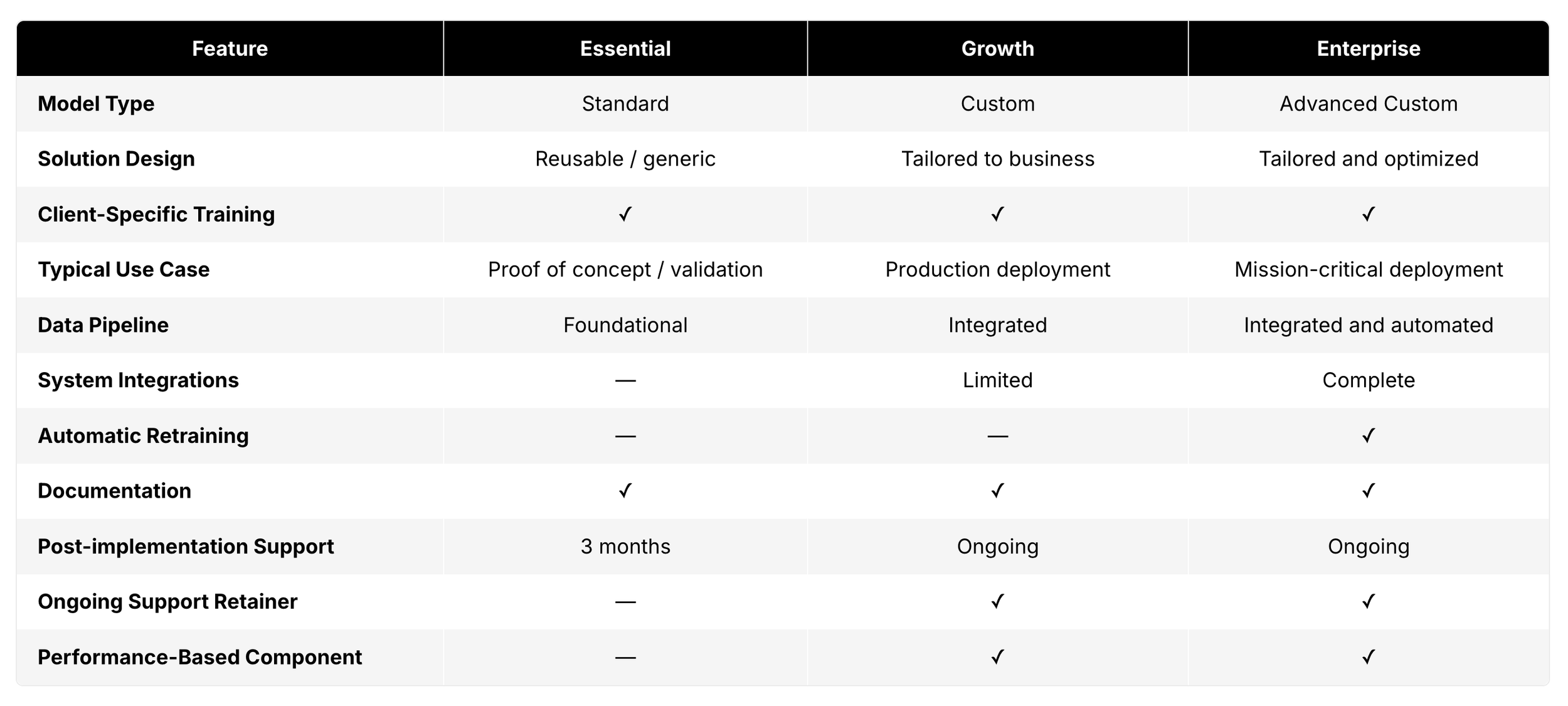
Our Plans